When people think about IT support, they often imagine someone turning up to fix a slow laptop, reset a password, or reconnect a printer. But that old break–fix model no longer fits how modern businesses use technology, or how today’s cyber threats operate.
A Managed IT Provider (MSP) is not a repair service. It is an outsourced IT department, ideal for organisations that aren’t large enough to hire an internal team or those who want a more standardised, professional, and proactive approach to IT.
An MSP handles every aspect of an organisation’s IT from the outside: user support, cyber security, monitoring, system maintenance, backups, lifecycle management, cloud services, compliance, and long-term planning. The goal is simple:
Keep your technology secure, stable, and running, so you can focus on your core business.
The Big Difference, Proactive vs Reactive
Most businesses don’t think about IT until something goes wrong. Traditionally, a local “fix-it” company would step in only when you called, after the failure, data loss, or disruption had already happened.
But modern IT doesn’t fail suddenly. Problems build quietly in the background through outdated software, weak credentials, unmonitored systems, and undetected cyber threats.
This is the core distinction:
A break–fix company reacts to problems.
A Managed IT Provider prevents them.
Below is how the two compare.
Break–fix IT (Fix-it company)
- You pay when something breaks.
- You call only when there’s a problem.
- No monitoring, no automation, no prevention.
- Issues usually cost more because they’ve been developing behind the scenes for months.
Managed IT provider
- You pay a predictable monthly fee.
- Your systems are monitored 24/7.
- Problems are fixed before you notice them.
- You get cyber protection, backups, patching, and guidance, not just repairs.
One is like calling a mechanic only when your engine explodes. The other is like having a full-time technician keeping your car serviced, fuelled, insured, and safe.
What a Managed IT Provider Actually Does
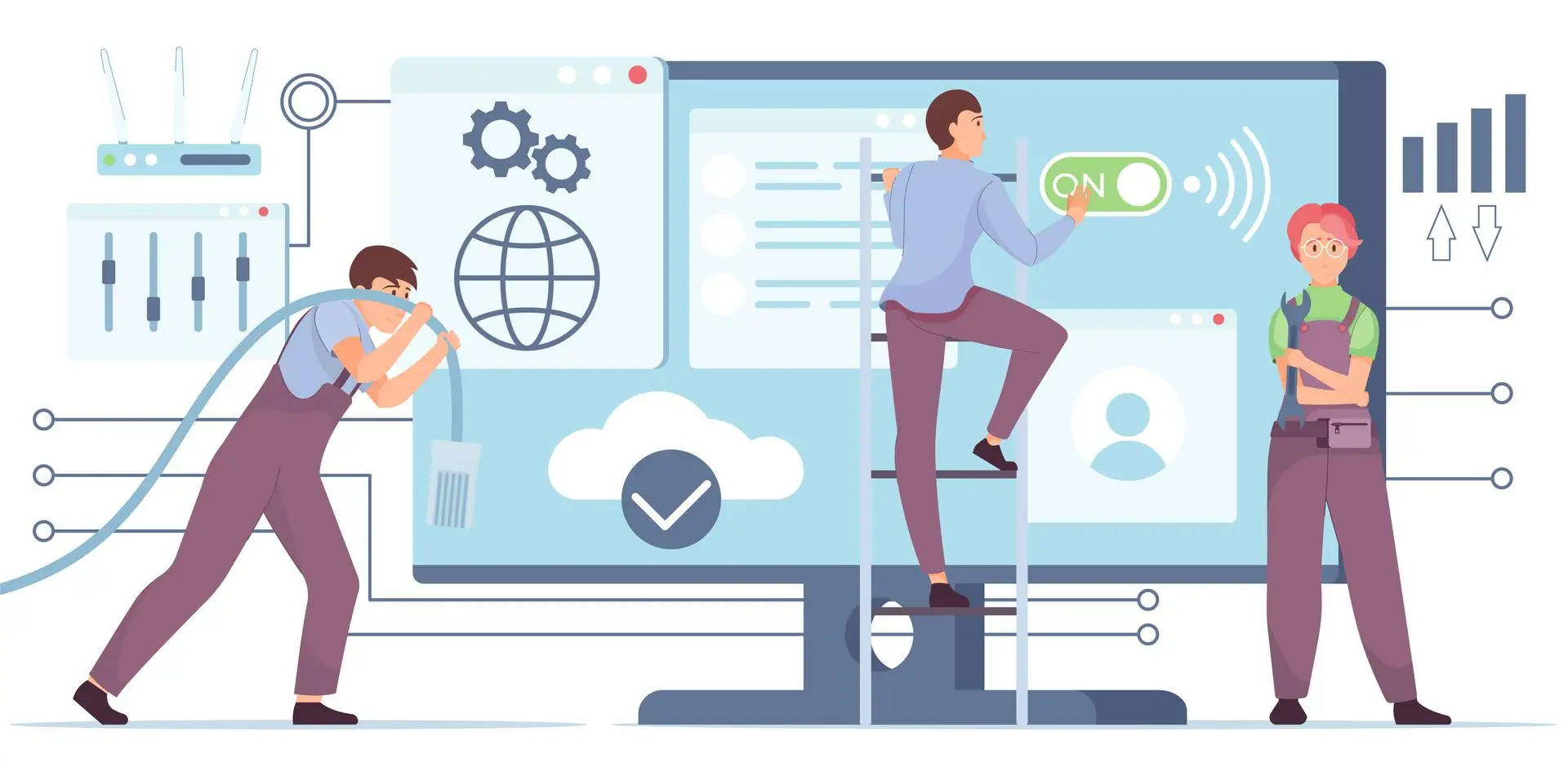
Let’s break down the services most clients don’t realise they’re getting behind the scenes.
1. Proactive security monitoring
Managed IT Providers operate as a defensive shield around your business, protecting data, systems, and staff.
They provide:
- 24/7 monitoring of networks, servers, and devices
- Real-time threat detection for suspicious logins, malware, or unauthorised access
- Patch management, ensuring systems stay up to date and protected from vulnerabilities
- Endpoint protection for all laptops, desktops, and mobile devices
This proactive model reduces the likelihood of outages, breaches, and costly downtime.
2. Cybersecurity defence
This is where modern MSPs go far beyond what a “fix-it” company can offer.
They implement and manage:
- Multi-factor authentication (MFA) across accounts
- Firewall configuration and monitoring
- Email security filtering to block phishing and malicious attachments
- Dark web monitoring to alert you if credentials appear in data breaches
- Regular security audits and vulnerability assessments
- Ransomware protection and recovery solutions
This layered defence model is essential in a world where cyberattacks are automated and opportunistic.
3. Data protection & continuity
Data loss is one of the biggest risks for any business. A Managed IT Provider ensures your information stays safe and recoverable.
Their responsibilities typically include:
- Automated daily or hourly backups with secure offsite storage
- Disaster recovery planning and testing
- Business continuity strategies, ensuring operations can continue during incidents
- Data encryption at rest and in transit
These processes guarantee that, even in worst-case scenarios, your information remains protected.
4. Everyday IT management
This is the side of Managed IT that clients interact with most.
Your MSP provides:
- Helpdesk support for day-to-day issues (logins, password resets, software problems)
- Hardware lifecycle management
- Software licence management and procurement
- Cloud services administration (Microsoft 365, etc.)
- Network and Wi-Fi maintenance
This reduces workplace frustration and keeps staff productive.
5. Compliance, policy & documentation
A crucial but often invisible part of Managed IT is helping businesses stay compliant and organised.
Typical support includes:
- Assistance with GDPR, Cyber Essentials, and sector-specific requirements
- Development of IT and security policies
- Ongoing security awareness training for staff
- Full documentation of networks, devices, processes, and configurations
This ensures your IT environment is not only secure, but auditable and scalable.
In Summary: Managed IT is about prevention, not repair

A Managed IT Provider isn’t just there to fix computers, they’re there to stop problems happening in the first place. They secure your systems, protect your data, support your team, and keep your business running smoothly.
Whether it’s sorting out a login issue or preventing a cyberattack from ever reaching your network, the entire purpose of an MSP is to keep you operating without disruption.
When your IT is proactively managed, the real success isn’t what breaks, it’s everything that never does.